
Short-term rentals in Chicago, Illinois
Chicago registers every short-term rental and excludes listed buildings and restricted precincts. How eligibility works for owners and investors, and what it costs.
AirDNA market averages (markets with at least 150 active listings), atlas updated September 2026, in US dollars. An average across all property sizes, not a promise. Rules status: our summary — read the text and the guide.
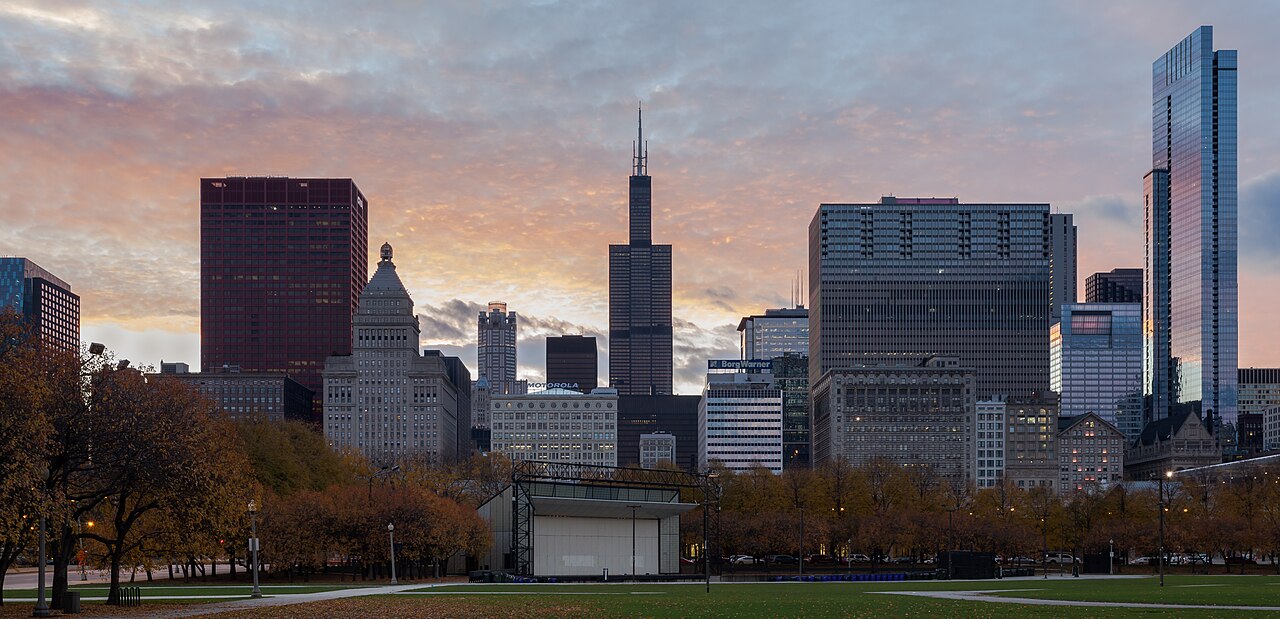
Chicago has the deepest visitor market in the Midwest: McCormick Place conventions, the lakefront, museums and architecture tours, Cubs, Sox, Bears, Bulls and Blackhawks, summer festivals such as Lollapalooza, and a huge base of business and medical travel. Demand holds up through much of the year, with summer the high point. Rentals are mostly condos and apartments in River North, the West Loop, Lincoln Park, Lakeview and Wicker Park, and units in the two-flats and three-flats of Logan Square, Pilsen, Bucktown and Bridgeport.
The shared housing ordinance
Chicago regulates short-term rentals under its shared housing rules, administered by the Department of Business Affairs and Consumer Protection. Every unit must be registered, and the registration number must appear in listings. Eligibility depends on the building:
- Single-family homes and two-to-four-unit buildings: the unit must be your primary residence, and only one unit per building can be registered.
- Buildings with five or more units: primary residence is not required, but the number of units that may be rented is capped relative to the building's size.
An operator running several units needs an additional operator license.
Three ways a property can be excluded
- The prohibited buildings list: buildings whose owners or boards have opted out of short-term rentals. The list runs to thousands of addresses.
- Restricted residential zones: precincts where voters have petitioned to block new shared housing units. Hundreds of precincts are covered.
- Private documents: a condo declaration, co-op rules or a lease that forbids short stays disqualifies the unit regardless of city approval.
Operating rules add minimum stay lengths, occupancy limits based on floor area, safety equipment, guest records and non-discrimination duties. Fines per violation are steep, and repeat problems lead to suspension. The city has also turned to litigation against platforms and high-volume operators it considers non-compliant.
Taxes
Chicago stacks the state Hotel Operators' Occupation Tax, Cook County's hotel tax and city hotel taxes with extra surcharges on shared housing; the combined rate is one of the heaviest tax stacks an owner will meet anywhere. Airbnb collects and remits them on its bookings; check the rest.
What we tell owners
- Check the prohibited list and your precinct before anything else.
- For an investor, only units in larger buildings, within the building's cap, are realistic.
- Medium stays of 32 nights or more fall outside the ordinance and suit Chicago's medical and corporate demand.
Our advice
Chicago is a strong market with a strict gate. Get through the gate first. We study every request and tell you honestly whether and how we can help.
Around Chicago
Read next
- Illinois
- Short-term rental in Bloomington
- Short-term rental in Fort Wayne
- Short-term rental in Indianapolis
- Occupancy taxes on short-term rentals, explained
- DSCR loans for short-term rentals, and the new conventional option
- Owning a US short-term rental from abroad: the tax map
- Short-term rental in the USA
Sources
- BNBCalc - Chicago short-term rental regulations (2026-07)
- City of Chicago BACP - Shared Housing Units (atlas source (403 on 2026-09-27))
Updated 20/10/2026.
Thinking of renting out your property?
Tell us about it: we study every request, check the rules for your exact address and tell you honestly whether and how we can help. Free and without obligation — Hexuvium, managing short-term rentals since 2015.
Get a free income estimate