
Alaska short-term rental rules for owners
Alaska has no state rental law or lodging tax, but every host needs a business license and faces local bed taxes and, increasingly, city registration.
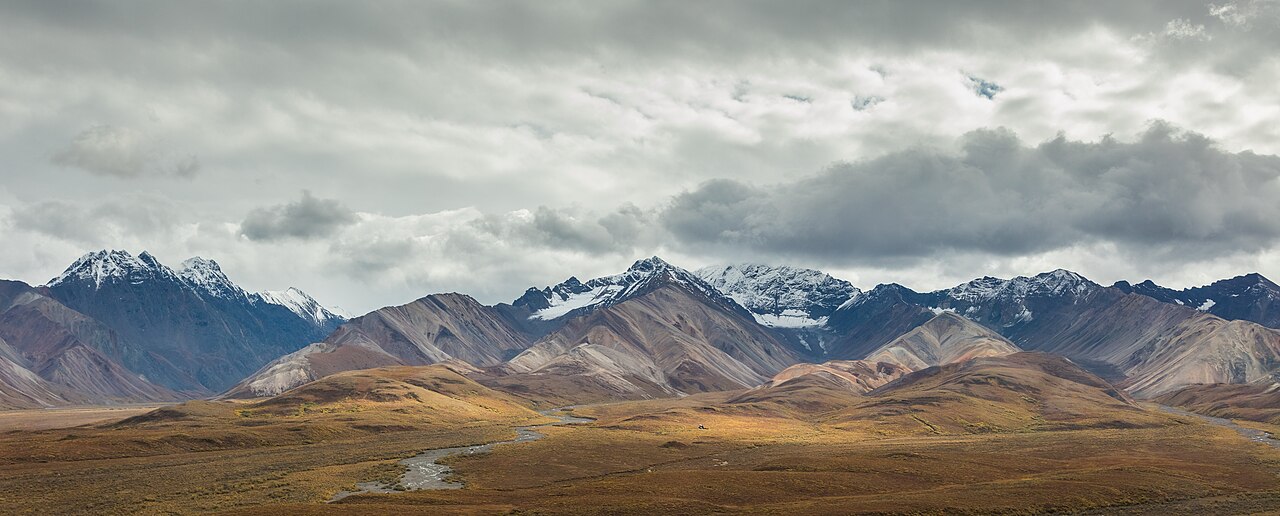
Alaska is the lightest regulatory environment in our western atlas. There is no state short-term rental statute, no state sales tax and no state lodging tax. What remains is a state business license, a mosaic of borough and city taxes, and a small but growing number of local registration programs, most of them adopted in the last three years as visitor numbers and housing pressure both rose.
The state layer: a business license
The Alaska Division of Corporations, Business and Professional Licensing is clear on one point: if you collect rental income, you are engaged in business and need an Alaska business license under AS 43.70.020. That covers a whole-house vacation rental, a cabin, a mother-in-law apartment or a spare room. If you hold the property through an LLC or corporation, the entity must be registered first. Beyond that, the state leaves regulation to local governments.
Local taxes: borough, city, or both
Because the state does not tax lodging, every tax on a stay is local, and the combination depends on the address. Some jurisdictions levy a dedicated bed or room tax, others apply general sales tax to short stays, and some do both:
- Anchorage: a 12% room tax on stays under 30 days.
- Juneau: 5% sales tax plus a 9% hotel room tax; cleaning fees bear only the sales tax.
- Fairbanks North Star Borough: a borough room tax (8% in the current code), with an increase debated by the assembly in 2025.
- Matanuska-Susitna Borough: a 5% bed tax, filed quarterly.
- Kenai Peninsula Borough: a 3% borough sales tax, applied to each daily or weekly stay up to a $500 taxable cap per transaction, plus city sales tax in towns such as Homer (4.85%). Voters rejected indexing that cap to inflation in October 2025.
Collection by platforms runs partly through the Alaska Remote Seller Sales Tax Commission, which gathers tax for member communities and keeps a fee before passing it on. Not every borough has joined: the Kenai Peninsula Borough had not as of September 2026, so owners there still report borough tax themselves. Homer was considering an ordinance to shift its own collection onto platforms, with a public hearing set for September 28, 2026.
Local registration is spreading
- Juneau has required free registration of each unit since July 2023, with the registration number shown on every listing. Since July 1, 2025, hosting platforms must collect and remit the city's sales and room taxes.
- Anchorage adopted a registration ordinance in December 2025. The free portal opened on May 1, 2026, platforms cannot process bookings for unregistered units, the registration number must appear in advertising, and fines can reach $1,000 per violation after the grace period. The ordinance also confirmed that short-term rentals are allowed in all residential zones. An additional 5% tax was rejected by the Assembly.
- Seward requires a city business license, a life-safety inspection and a short-term rental permit for each unit, with proof of commercial insurance. In July 2026 the council discussed a cap without adopting one.
Across large parts of the Kenai Peninsula, Mat-Su and the Interior, there is no dedicated rental permit outside city limits.
Practical risks: season, access, insurance
Alaska demand is intensely seasonal: long summer days bring fishing, cruise, glacier and national park visitors, while winter relies on aurora travelers, skiers and workers. Property care matters as much as regulation. Freeze protection, snow removal, well and septic systems, and remote access by road, ferry or plane all shape costs. Insurers may treat a cabin on a gravel road or a property with a wood stove differently from a city home; declare the rental use and confirm coverage for guest liability.
Associations and subdivisions
Many Alaska subdivisions, especially around Anchorage, Girdwood and the Mat-Su valley, have covenants that can restrict commercial use or short stays. They bind you regardless of the borough's position.
Our Alaska markets
- Registration: Anchorage.
- Open: Kenai Peninsula and our wider Alaska area page covering Fairbanks, Juneau, Mat-Su and other communities, each with local taxes and, in a few towns, a registration or permit.
Checklist
- Obtain an Alaska business license before the first booking.
- Identify every tax that applies: borough, city, bed tax or sales tax.
- Check whether the city requires registration or a permit, and display the number.
- Confirm what platforms collect and what you must file yourself.
- Read subdivision covenants and set up winter maintenance and insurance.
If you own a property in Alaska or are looking at one, we study every request and tell you honestly whether and how we can help.
Markets covered
Other guides
Sources
- Alaska DCCED - Property Rental FAQs (business license) (consulted 2026-09-27)
- Municipality of Anchorage - Room Tax (consulted 2026-09-27)
- Avalara MyLodgeTax - Anchorage mandates registration for short-term rental properties (2026-04)
- Alaska Public Media - Anchorage data on short-term rentals (2026-09-01)
- City and Borough of Juneau - Short Term Rentals (consulted 2026-09-27)
- Fairbanks North Star Borough Code 8.48.020 (consulted 2026-09-27)
- Matanuska-Susitna Borough - Bed Tax (consulted 2026-09-27)
- KDLL - Ballot proposition would tie KPB sales tax cap to inflation (2025-08-15)
- Alaska's News Source - KPB unofficial election results (Prop 4) (2025-10-09)
- KBBI - Homer considers putting rental platforms in charge of collecting sales tax (2026-09-25)
- City of Seward - Short Term Rentals (consulted 2026-09-27)
Updated 28/09/2026.
Thinking of renting out your property?
Tell us about it: we study every request, check the rules for your exact address and tell you honestly whether and how we can help. Free and without obligation — Hexuvium, managing short-term rentals since 2015.
Get a free income estimate