
Short-term rental in Croatia: rules and advice for owners
What the law in Croatia asks of owners who let their home on Airbnb or Booking, which cities are open or restricted, and our practical advice. Updated 10/10/2026.
A law built around the resident host
Croatia's Hospitality Activities Act (NN 152/2024) separates the resident host, whose permanent residence is registered in the same local unit as the property, from owners who let purely for profit, and taxes the two differently. Every unit needs a categorisation decision (rješenje) from the county office, entry in the eTourism system and a registration number shown in each advertisement; guests are registered through eVisitor. In apartment buildings, the law now requires the consent of a qualified majority of co-owners, given for several years and open to withdrawal after breaches.
Local power over beds and zones
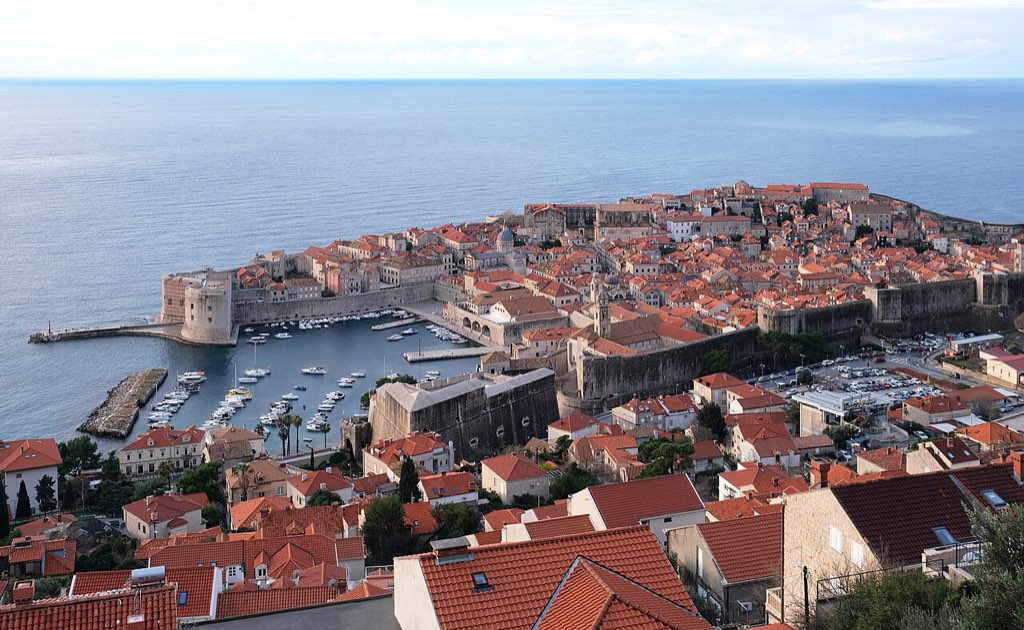
Towns decide much of the practical outcome through spatial plans and their policy on tourist capacity. Dubrovnik is the tightest case: private tourist beds fell by more than 2,000 in the 2025 peak season after the new rules, and new capacity there should be considered unlikely until the city's plans say otherwise.
Our Croatian cities
Zagreb, Split, Rijeka, Zadar and Pula belong to the licence group: open to owners who obtain the rješenje and meet the building-consent requirement. Dubrovnik is in the freeze group for practical purposes.
Tax and levies
Private renters usually choose between a flat-rate tax per bed, fixed by the municipality, and taxation of actual income minus documented costs such as utilities, depreciation and loan interest. Local practitioners put the flat rate at roughly €100 to €300 per bed per year in the most touristic areas, including Zagreb and Split. Tourist tax is paid per guest night on top, and fines for unregistered letting range from €1,000 to €15,000 for individuals.
What this means for you
The permit is issued to the owner, who remains the host of record; a manager works alongside you, not in your place. Secure the co-owners' consent before investing, check the spatial plan of the town, and budget the flat-rate tax as a fixed cost that is due whatever the season brings. We study every request and tell you honestly whether and how we can help.
Where it earns most: AirDNA markets
| Market | Avg nightly rate | Occupancy | Avg yearly revenue | Rules |
|---|---|---|---|---|
| Opcina Klis | €308 | 65% | €47,844 | restrictif |
| Stikovica | €317 | 68% | €46,234 | restrictif |
| Opcina Tinjan | €250 | 63% | €27,580 | restrictif |
| Opcina Brtonigla | €245 | 58% | €26,070 | restrictif |
| Jesenice | €192 | 67% | €26,058 | restrictif |
| Dubrovnik | €167 | 71% | €25,945 | freeze |
AirDNA 2026, markets with at least 150 active listings and more than $30,000 of yearly revenue per listing, converted at 1 EUR = 1.1567 USD. These are the strongest markets, not the national average, and not a promise.
Other languages: FR · NL · DE · ES · PT · IT
Neighbouring countries
Other country guides
All European countries covered by Hexuvium →
Frequently asked questions
Is Airbnb legal in Croatia?
Croatia's Hospitality Act ties short lets to the owner's permit and co-owners' consent: five coastal and inland cities stay open, while Dubrovnik is effectively saturated.
Can Hexuvium manage my property in Croatia?
Send us your address and a short description. We check the national and local rules for your exact property in Croatia, then tell you honestly whether and how we can help — free and without obligation.
Sources
- Confida – New Law on Hospitality Activities (2025)
- Regent – Short-term rental: registration, taxes and obligations for owners (2026)
- Tourism Review – Dubrovnik fights against short-term rentals (2025-2026)
Thinking of renting out your home?
Tell us about your property: we study every request, check the local rules with you and tell you honestly whether and how we can help. Free and without obligation — Hexuvium, managing short-term rentals since 2015.
Get a free income estimate